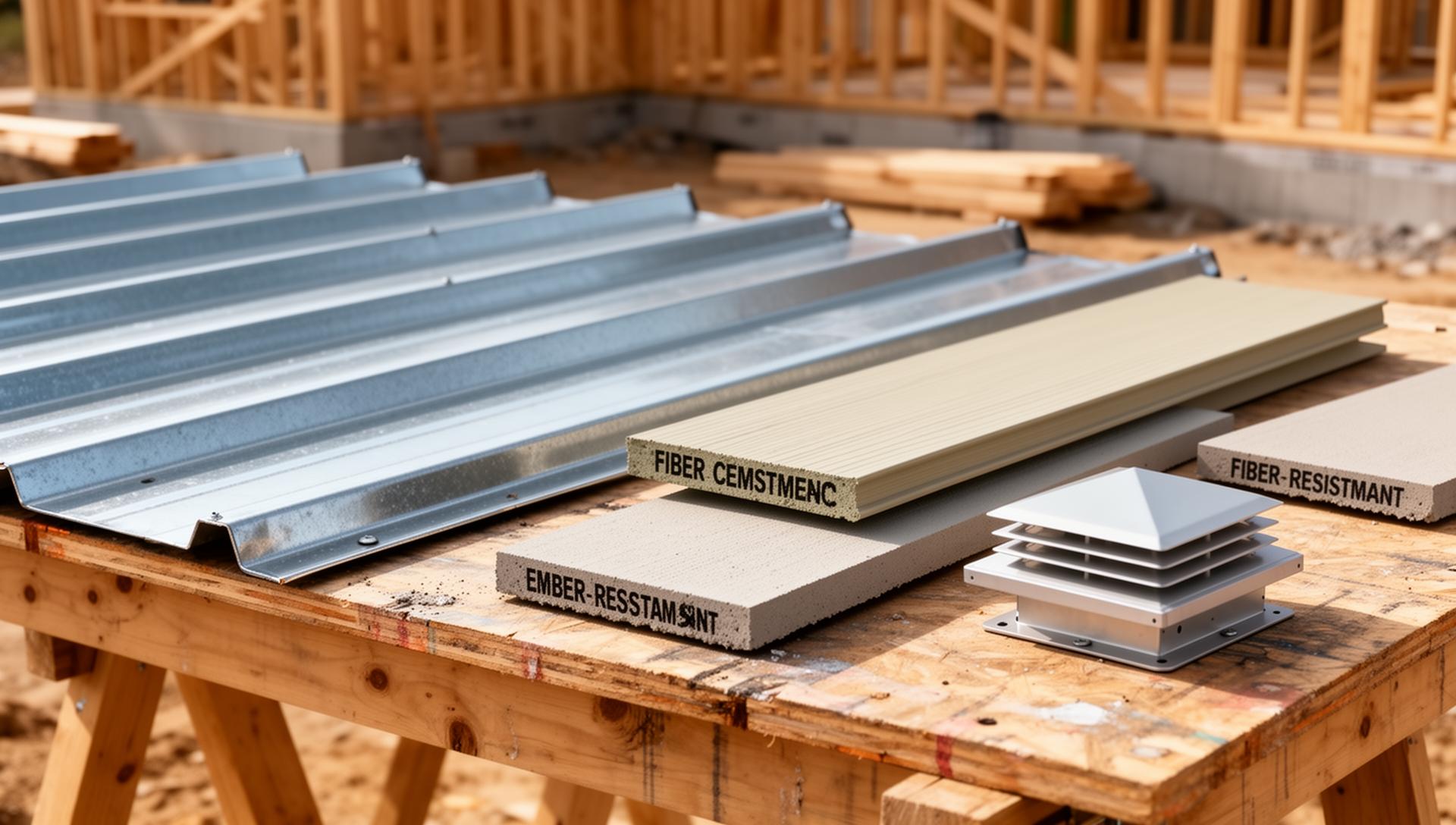
Fire-Resistant Building Materials: What to Use When Rebuilding
When rebuilding after a wildfire, the materials you choose determine how well your new home can withstand future fire events. California's Chapter 7A building codes set the minimum standard — but smart homeowners go further. Here's what you need to know about each critical material category.
Class A Fire-Rated Roofing
Your roof is your home's first line of defense against airborne embers — the primary way wildfires spread to structures. Class A rated materials include concrete and clay tiles, metal roofing, and certain composite shingles. These materials resist fire penetration for at least one hour. Avoid wood shakes entirely; even treated versions are prohibited in California's wildland-urban interface zones.
Ignition-Resistant Exterior Siding
Fiber cement siding (like James Hardie products) is the gold standard for fire-prone areas. It won't ignite, melt, or contribute fuel to a fire. Stucco is another excellent option. Both meet the Chapter 7A requirement for ignition-resistant exterior wall coverings. Vinyl siding, while it doesn't sustain flame, can melt and expose the sheathing beneath — making it a poor choice for high-risk zones.
Tempered Dual-Pane Windows
Windows are among the most vulnerable points in a wildfire. Radiant heat from nearby burning vegetation or structures can shatter single-pane glass from over 100 feet away. Tempered, dual-pane windows resist radiant heat significantly longer — often long enough for the fire front to pass. Current California code requires tempered glass in all windows within WUI zones.
Ember-Resistant Vents
Standard attic and foundation vents allow embers to enter your home's most vulnerable spaces. Ember-resistant vents use fine mesh screens (1/8-inch or smaller) or intumescent technology that swells shut when exposed to heat. Products like Brandguard and Vulcan Vents are specifically engineered for WUI compliance. This is one of the most impactful and affordable upgrades you can make.
Defensible Space & Hardscape
While not a building material, defensible space is equally important. California law requires 100 feet of defensible space around structures in fire-prone areas. Zone 1 (0–5 feet) should be entirely non-combustible — gravel, concrete, or pavers. Zone 2 (5–30 feet) should feature well-irrigated, fire-resistant plants spaced to prevent fire spread. This isn't just good practice; it's the law.
The Bottom Line: Build Beyond Code
California's Chapter 7A codes are a solid baseline, but they represent the minimum standard. The strongest fire-resistant homes combine compliant materials with smart design — non-combustible landscaping, enclosed eaves, fire-resistant decking, and thoughtful site planning. Your contractor should be able to walk you through these options and help you balance fire safety with your budget and design preferences.
Frequently Asked Questions
Are fire-resistant materials significantly more expensive?
Some are, some aren't. Ember-resistant vents cost about the same as standard vents. Fiber cement siding costs 20–30% more than vinyl but lasts much longer. Class A roofing varies widely — metal roofing can actually be comparable to premium asphalt. Overall, fire-resistant materials typically add 5–15% to construction costs while providing dramatically better protection.
Will my insurance cover the cost of fire-resistant upgrades?
If you're rebuilding after a covered fire loss, California law requires insurers to cover the cost of meeting current building codes — including Chapter 7A requirements. Upgrades beyond code minimums may or may not be covered depending on your policy. Some insurers also offer premium discounts for homes built with superior fire-resistant materials.
Build Your Home to Last
Our team specializes in fire-resistant construction using the highest-quality materials for California's WUI zones.
Discuss Materials for Your Rebuild