What to Expect During the Fire Rebuild Process
Losing your home to a wildfire is devastating — but rebuilding doesn't have to be overwhelming. Understanding each phase of the reconstruction process helps you make informed decisions, stay on timeline, and ultimately return to a home that's safer and more resilient than before.
The Five Phases of a Fire Rebuild
Every fire rebuild follows a general sequence, though timelines vary based on the extent of damage, your location, and permit processing times. Here's what homeowners in Altadena, Pacific Palisades, and surrounding communities can expect.
1. Assessment & Documentation
After a wildfire, the first step is a thorough assessment of the damage. This includes documenting everything for your insurance claim — photographs, inventories, and structural evaluations. A licensed contractor can coordinate with your insurance adjuster to ensure nothing is overlooked. This phase typically takes 2–4 weeks depending on the scope of destruction and access to the property.
2. Permitting & Design
California requires permits for all rebuild work. After the Eaton and Palisades fires, LA County and local jurisdictions created expedited permitting pathways for fire victims. During this phase you'll work with architects and your contractor to finalize plans — whether you're rebuilding to the original footprint or making upgrades. Expect 4–8 weeks for plan review and approval.
3. Site Preparation & Debris Removal
Before any construction begins, the lot must be cleared of debris and hazardous materials. Government programs like the Army Corps of Engineers removal program handle much of this, but additional private clearing may be needed. Soil testing for contaminants is also conducted during this stage to ensure a safe building environment.
4. Foundation & Framing
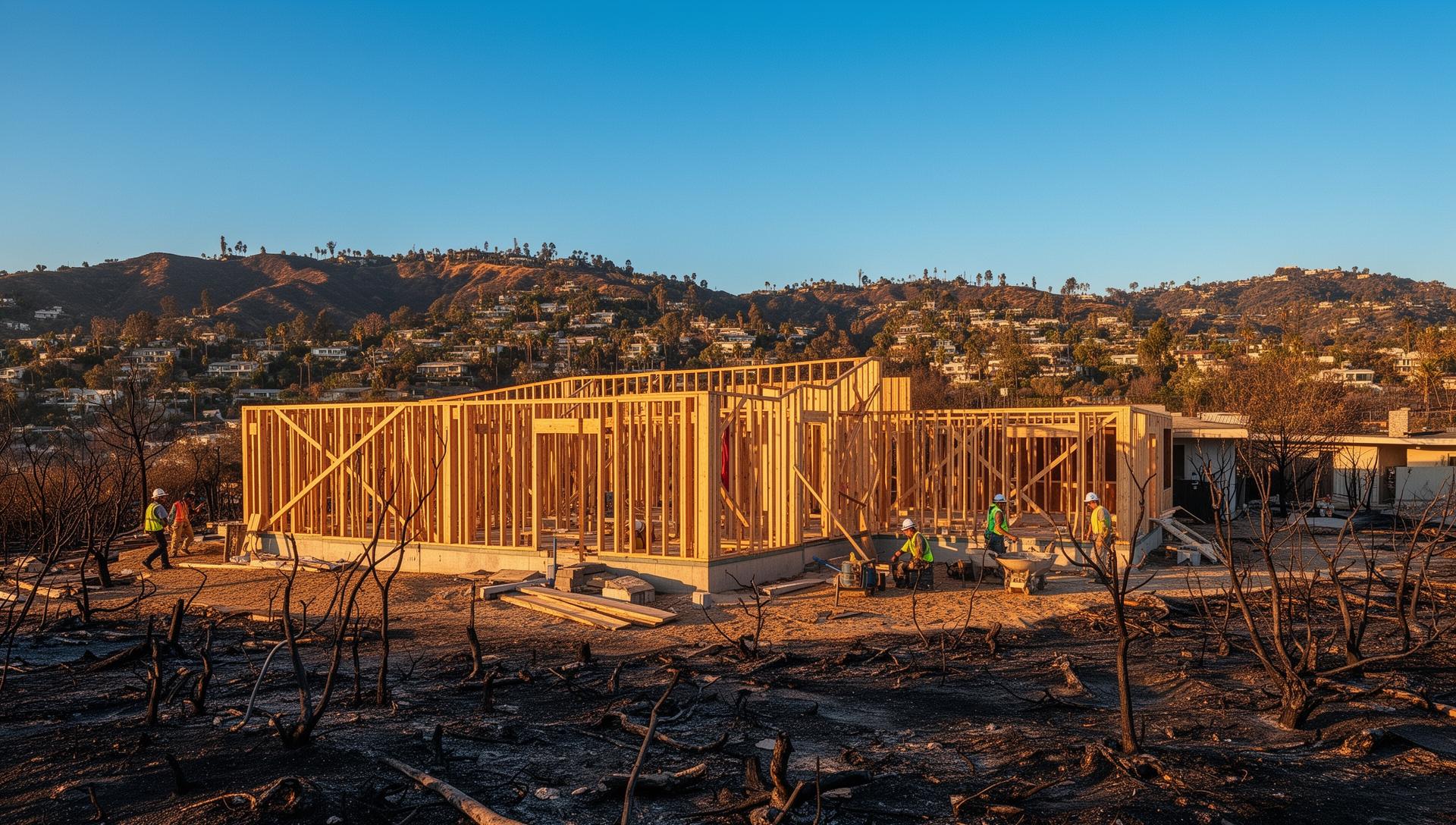
With a clean lot and approved plans, construction begins with the foundation. Modern fire rebuilds often incorporate upgraded foundations — reinforced concrete, deeper footings, and improved drainage. Framing follows, using fire-resistant materials and techniques that meet or exceed current California building codes, including the Chapter 7A wildland-urban interface requirements.
5. Systems, Finishes & Final Inspection
Electrical, plumbing, and HVAC systems are installed according to current code — which often represents significant upgrades over the original home. Interior and exterior finishes follow, including fire-resistant roofing, ignition-resistant siding, and tempered dual-pane windows. The project concludes with final inspections, certificate of occupancy, and your move-in.
How Long Does a Fire Rebuild Take?
Most fire rebuilds in the Los Angeles area take 12 to 18 months from permit approval to completion. Factors that affect the timeline include plan complexity, material availability, weather, and inspection scheduling. Working with an experienced fire rebuild contractor who manages the entire process can significantly reduce delays and coordination headaches.
Rebuilding Better Than Before
One silver lining of rebuilding is the opportunity to incorporate modern building codes, energy-efficient systems, and fire-resistant materials that weren't available — or weren't required — when your original home was built. Many homeowners find that their rebuilt home is safer, more comfortable, and more energy-efficient than the one they lost.
California's updated building codes for wildland-urban interface zones now require Class A fire-rated roofing, ignition-resistant exterior materials, ember-resistant vents, and tempered glass windows. These aren't optional upgrades — they're the new standard, and they dramatically improve your home's survivability in future fire events.
Frequently Asked Questions
Can I rebuild to a different design than my original home?
In most cases, yes. If you're rebuilding to the same footprint and square footage, the permitting process is typically faster. If you want to change the layout or add square footage, you may need a full plan review, which takes longer but is still achievable.
Will my insurance cover the full cost of rebuilding?
This depends on your policy limits and the current cost of construction. Many homeowners find that their coverage falls short of actual rebuild costs due to increased material and labor prices. An experienced contractor can provide detailed estimates early in the process to help you identify any gaps.
Do I need to be present during construction?
No. A good contractor will keep you informed with regular progress updates, photos, and scheduled walkthroughs. Many fire rebuild clients are living temporarily in other areas and rely on their contractor to manage the day-to-day work on their behalf.
Ready to Start Your Rebuild?
With 37+ years of experience and 54 fire rebuilds currently in progress, 1st Choice Development is here to guide you through every step.
Schedule a Free Consultation